

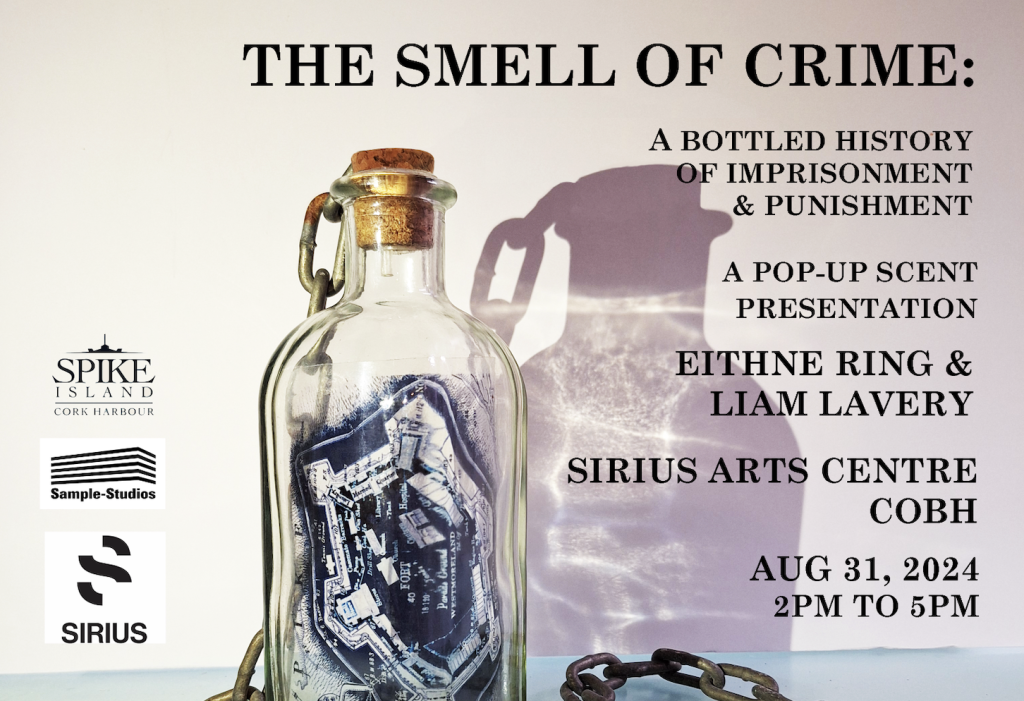
This interactive olfactory experience invites the public to engage with works that evoke a deep visceral response to Spike Island prison and its inmates. Using bottles as receptacles for Spike Island’s history, visitors can follow their noses back through time, bringing the island’s rich past to life through smell and sight. Each bottle holds a piece of the island’s past, from its days as a military fortress to its time as an infamous prison. Visitors can interact with the scents by sliding open a hatch on the bottles’ caps, reminiscent of the spy-holes on prison cell doors.
During their residency project, Laveryring have delved into Spike Island’s history to create this immersive sensory experience centered around olfactory senses. The project explores the smells associated with crimes, imprisonments, and punishments, intertwining the power of scents with printmaking and sculpture to create a multi-sensory narrative that mirrors the human experience within Spike.
The essence of the prison experience is captured through scents like gunpowder, bread, burning, and the rank smell of must and mold. These olfactory threads, woven into Spike’s historical narrative, create a visceral storytelling experience. Spike Island, with its unique architecture and historical significance, serves as the ideal canvas for this exploration. The aromas that lingered within the prison walls over the centuries convey tales of poverty, isolation, and injustice – themes that continue to resonate in today’s world.
This project marks a departure from Lavery and Ring’s usual public art practice but connects through historical, social, and storytelling elements. By integrating their skills in public art with this new approach, they have extended their practice’s boundaries, reaching diverse audiences. The inclusion of an olfactory element enhances accessibility, offering an engaging experience for the visually impaired.
About the Artists
Lavery and Ring have been collaborating for 25 years, focusing primarily on public art. They work with a wide variety of materials, including cast bronze, aluminum, steel, glass, and most recently, polymer modified plaster. Their work is site-specific, delving into the history, myths, and geographical influences of each area. They transform these elements into tangible, context-rich artworks.
Their notable works include:
“Tempus Fugit” (2022): A 5m tall steel sculptural clock outside Waterford’s Museum of Time, part of the Fáilte Ireland Urban Animation projects. Its outstretched clock face wings light up at sunset in vibrant colours using an astronomical timing device to track the changing times of sunset.
“The Wave” (2017): A 20m long cast bronze and corten steel sculpture at the Lusitania Memorial on the Old Head of Kinsale, telling the story of the sinking of the HMS Lusitania. The piece lists all those onboard, whose names are revealed as the viewer walks around the curved sculpture, presented in a graphic novel style.
“Strongbow and Aoife” (2014): Two 2.4m high bronze thrones in Waterford City, depicting Strongbow and Aoife in medieval-style costumes to commemorate their 1170 marriage, a turning point in Irish history. The public interacts with the sculpture, making it a popular photo spot for visitors.