I make work about attention, recognition and imagination — about how an encounter with an image, a material or a space can open a different way of being in the world.
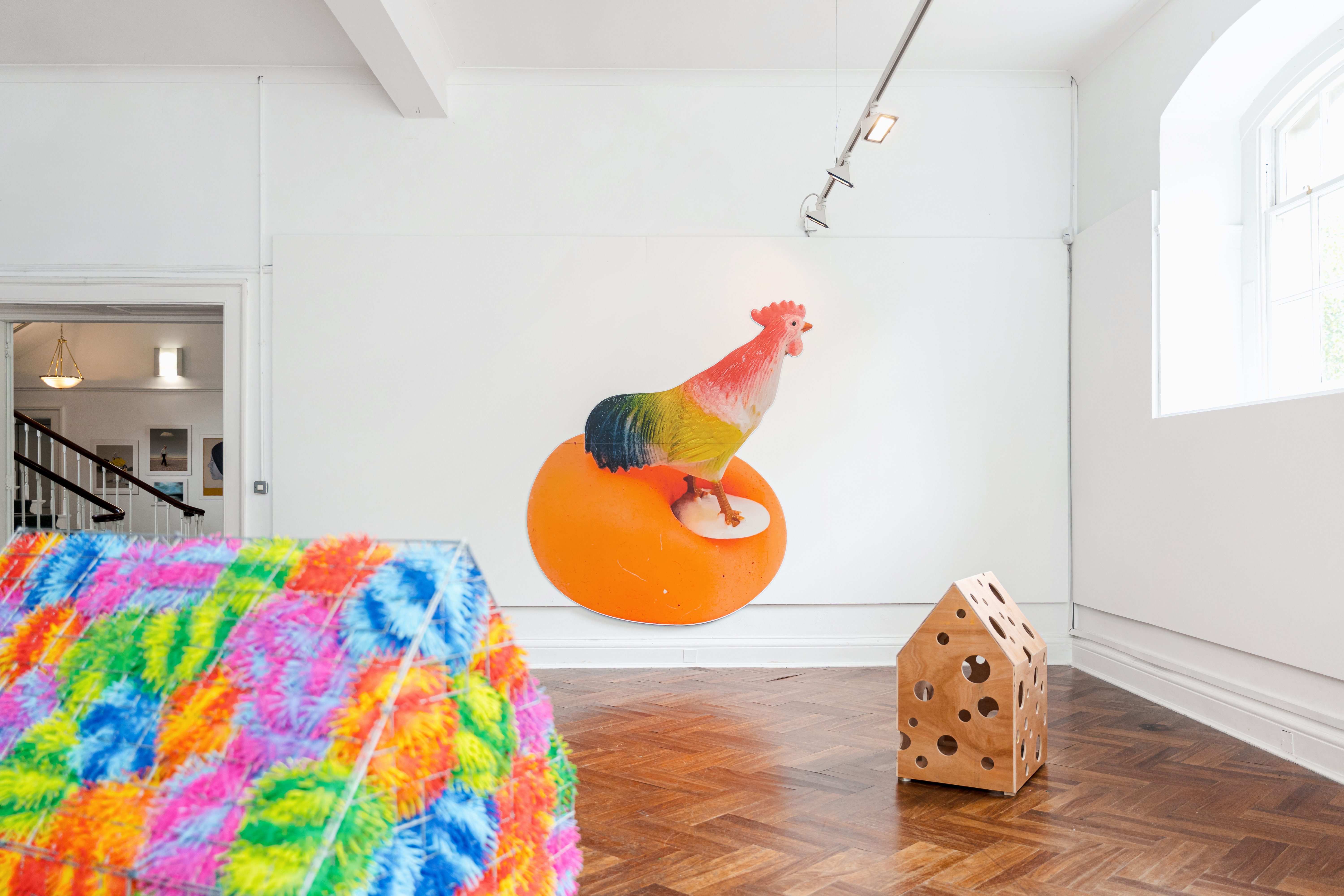
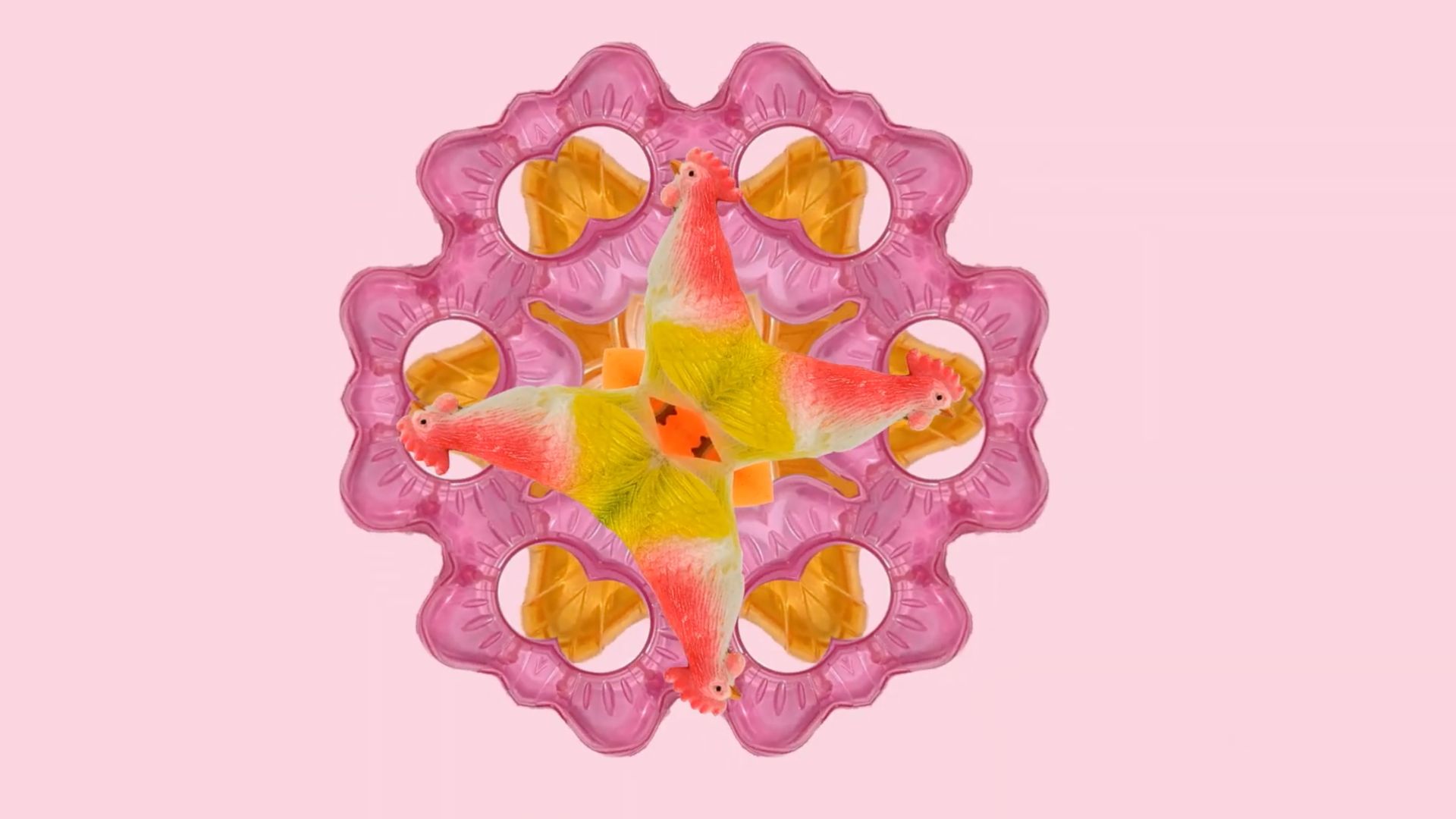
My method is distillation and distortion. I take living and natural things — ferns, faces, bodies, the ordinary creatures of a family walk — and I pare them back or push them past the representational, into silhouette, pattern and abstracted form. I am not interested in images that give you everything. The object matters; the scene around it falls away. I hold these distilled forms against a flat, saturated ground, or within a frame, a metal mesh, a mirrored interior — a boundary that contains them and concentrates their energy. Made still and strange, they come alive again: they seem to move, to press back against what holds them, to transform and recur across a body of work.
Repetition is deliberate. A form returns, enlarged, re-made in another material, multiplied until a quantity of single objects becomes a surface, a rhythm, a different whole. Soft forms massed behind a grid press through it, alive; a structure you can enter multiplies whoever steps inside. I use distortion the way a kaleidoscope does — playful on its surface, but a way of making the familiar unfamiliar, of asking what a thing is once it is no longer quite itself.
These are the questions I keep returning to. How can a form, held and abstracted, come back to life? What changes when something is enlarged, repeated, or translated into another material? How does the ground a thing sits against — its colour, its frame — change what that thing is and how we approach it? And what does it mean to recognise yourself, or your own body, in something made strange?
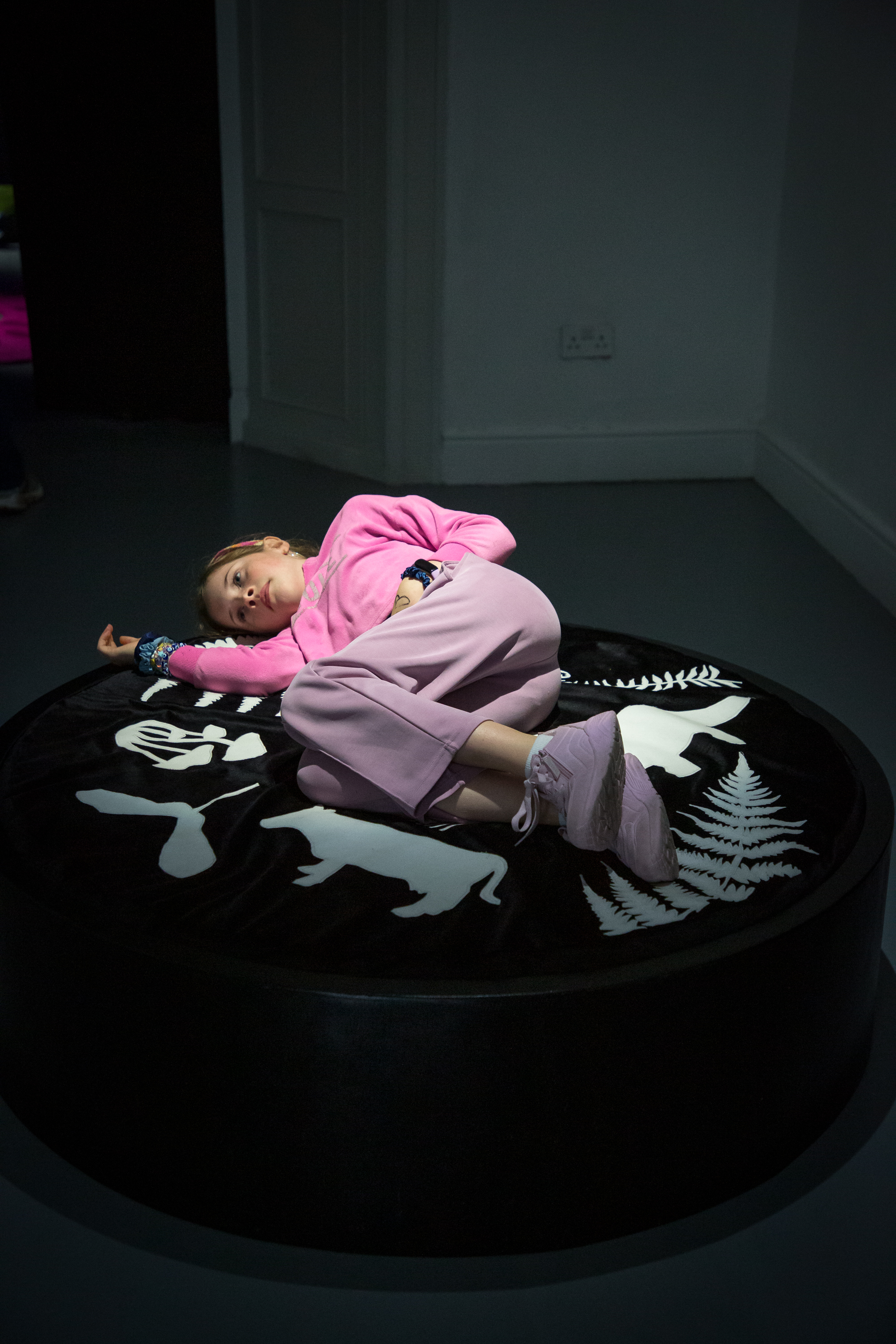
That last question is where my current research begins. Is This My Body? asks it directly — the question anyone might ask of a body that has changed through time, through birth, through age.
For more than a decade, I have developed this work in sustained, research-led dialogue with early years audiences — children from birth to six — and the adults who accompany them. It is a demanding audience, and a precise one. Very young children meet a work with their whole body before they meet it as an image: through looking, touch, scale, sound and proximity. Making for them asks that a work be robust enough to be handled, safe enough to be entered, and open enough to hold attention without explanation. These are not constraints I work around. They are the conditions that have shaped how I make: what a material can withstand, how a space receives a body, how long a form can hold a gaze.
The work is made to be met by anyone. It takes every viewer seriously as someone capable of attention, recognition and wonder — and the youngest, who have not yet decided that an object is only an object, show that most clearly.